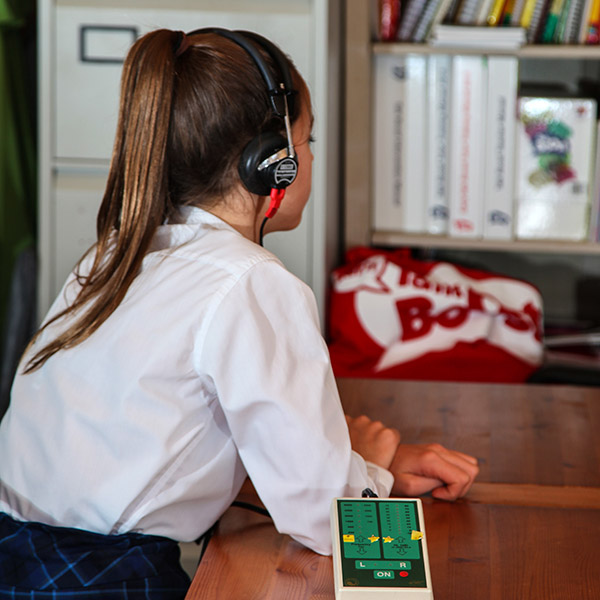
JOHANSEN INDIVIDUALISED AUDITORY STIMULATION

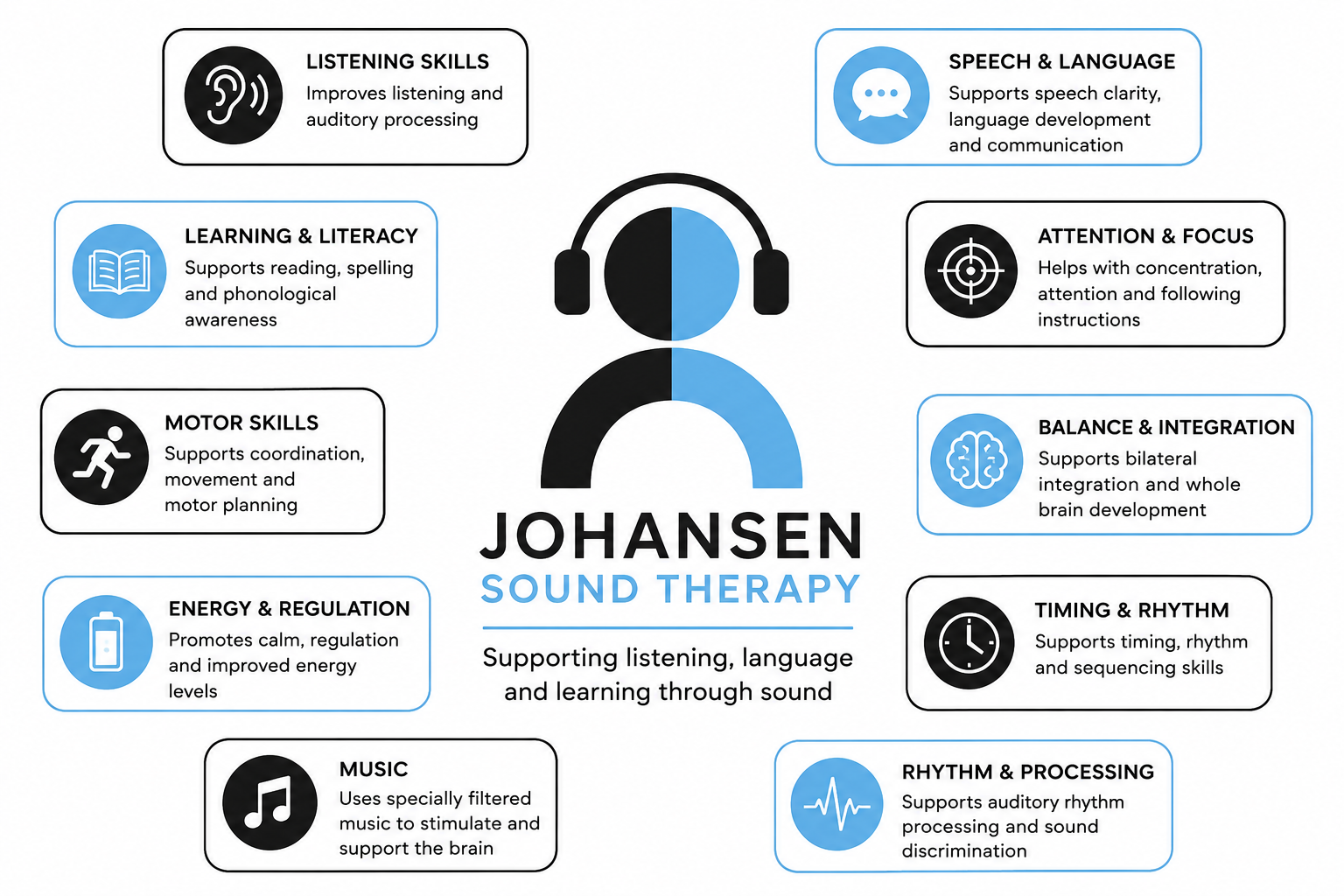
Challenges in one or more of the following areas:
Listening and Language
- Auditory processing and listening difficulties
- Difficulty understanding spoken language
- Delayed speech and language development
- Speech sound difficulties (pronunciation)
- Difficulty following instructions
- Challenges understanding and remembering information
Literacy and Learning
- Reading difficulties
- Spelling difficulties
- Dyslexia and literacy-related challenges
- Phonological awareness difficulties (recognising and manipulating speech sounds)
- Attention and concentration difficulties
Developmental and Neurodevelopmental Differences
- Dyspraxia (Developmental Coordination Disorder)
- Autism Spectrum Disorder
- Other learning and developmental differences affecting communication and learning
Sensory and Emotional Wellbeing
- Hypersensitivity to loud or specific sounds
- Reduced confidence and self-esteem linked to communication or learning difficulties
- Frustration or behavioural difficulties where communication challenges may be contributing
Hearing History
- A history of recurrent ear infections or Glue Ear
- Listening difficulties despite normal hearing test results
If you would like to explore whether Johansen Sound Therapy may be suitable for you or your child, please get in touch to discuss your individual circumstances.
As auditory processing becomes more efficient, families often report positive changes in areas such as:
- Listening and attention
- Concentration and focus
- Understanding spoken language
- Speech clarity and communication
- Reading and spelling development
- Confidence and self-esteem
- Social interaction
- Learning and classroom participation
Every individual is unique, and progress varies from person to person. The aim of JIAS is to support the brain's ability to process auditory information more effectively, creating stronger foundations for learning, communication and everyday life.
If you would like to explore whether Johansen Sound Therapy may be suitable for you or your child, please get in touch to discuss your individual circumstances.
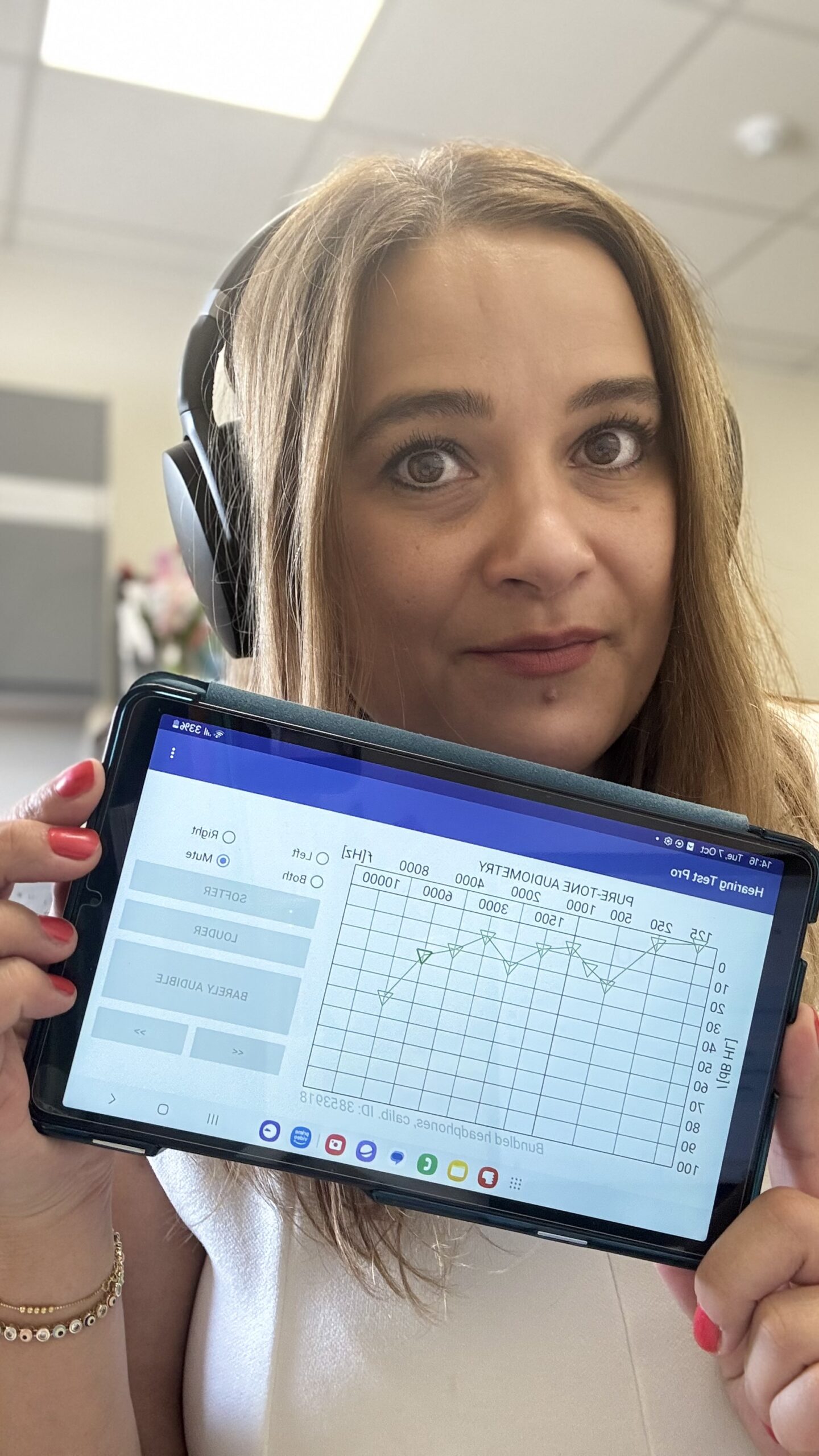
The first step is an assessment, which helps us understand your child’s listening skills, strengths and areas of difficulty. This may include questionnaires, discussion about development and learning, an audiogram if and when appropriate, and other formal and informal tests i.e laterality tests to explore ear, eye, hand and foot dominance.
Once the assessment is complete, a personalised Johansen Sound Therapy programme is created specifically for your child.
The programme is completed at home and involves listening to specially prepared music through headphones for 10–15 minutes each day. Many families choose to listen before bedtime, when children are relaxed and free from the distractions of the day.
REVIEWS: Every 6–10 weeks we meet for a review appointment to discuss progress, repeat the audiogram where appropriate, and make any adjustments needed. A new listening programme is then prepared to match your child’s developing needs.
Most children follow the programme for around 12 months, although this can vary depending on their age and individual needs. Younger children, or those unable to complete a full listening assessment, can still benefit from a programme tailored to their stage of development.