
Rhythm, Movement and
Brain Development
The Ronnie Gardiner Method: transforming lives through music and rhythm.
The Ronnie Gardiner Method (RGM) is a unique movement-based programme that combines rhythm, movement, speech, colour and music to challenge and strengthen the brain in a fun and engaging way. Originally developed by jazz drummer Ronnie Gardiner, RGM is now used internationally to support neurological development, rehabilitation, learning and healthy ageing. At its heart, RGM is about helping the brain and body work together more efficiently. Whether you are a child struggling with coordination, an adult recovering from stress or illness, or simply someone wanting to keep your brain active and healthy, RGM offers a joyful and effective way to exercise the brain.
Why Rhythm Matters
Long before we learn to speak, read or write, our brains develop through movement and rhythm.
Every heartbeat, every breath and every developmental milestone follows a rhythm.
When movement, sound and timing are combined, multiple areas of the brain are activated simultaneously. This creates opportunities for stronger neural connections, improved communication between brain regions and greater efficiency in the way the nervous system processes information.
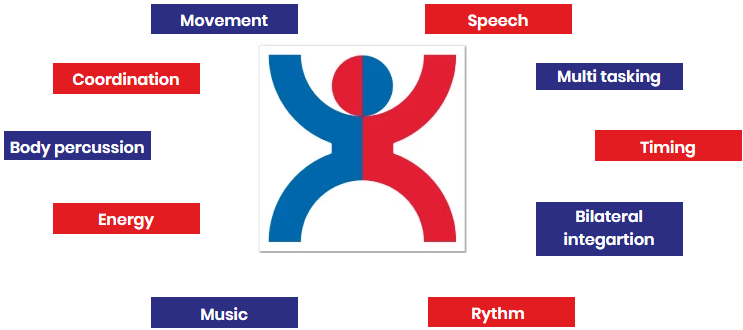
In RGM, participants use specially designed symbols and movements while following music and rhythm. This challenges the brain to coordinate thinking, listening, moving, speaking and timing all at once. The result is a whole-brain workout that is both stimulating and enjoyable.

How RGM Supports the Brain
RGM challenges several important neurological systems at the same time:
Attention and concentration
Working memory
Timing and sequencing
Bilateral coordination
Visual and auditory processing
Motor planning
Cognitive flexibility
Emotional regulation
Because the activities are progressive and adaptable, each participant can work at a level that is both achievable and appropriately challenging.

RGM and Neurodevelopment
In my practice, I often use RGM as a natural progression following reflex integration work.
Primitive reflex integration helps establish stronger neurological foundations. Once those foundations are in place, the brain benefits from opportunities to strengthen communication between different regions and to develop more efficient neural pathways.
RGM provides this challenge in a way that is structured, enjoyable and highly motivating.
Many clients describe it as the stage where they begin to experience greater confidence in using the skills that have developed through earlier neurodevelopmental work.
More Than Brain Training
Whilst RGM can support attention, learning and coordination, one of the aspects I value most is its effect on confidence and self-belief.
Many children and adults spend years focusing on what they find difficult.
RGM creates opportunities for success, achievement, laughter and connection.
It encourages participants to move, think, adapt and persevere in a supportive environment where mistakes are simply part of the learning process.
For many people, this can be just as important as the neurological benefits.
Who Can Benefit?
RGM may be helpful for:
- Children experiencing learning or developmental challenges
- Individuals with attention and concentration difficulties
- People seeking support with coordination and motor skills
- Adults experiencing stress, brain fog or reduced cognitive stamina
- Individuals recovering from neurological illness or injury
- Older adults wishing to maintain cognitive health and mobility
- Anyone who enjoys learning through movement, music and rhythm
No musical ability is required.
No dance experience is needed.
Just a willingness to join in and have fun.
What to Expect
Sessions are active, engaging and full of energy.
Using music, movement, rhythm and specially designed visual cues, participants are guided through a variety of exercises that challenge both body and brain.
The atmosphere is supportive, encouraging and often filled with laughter.
Most importantly, RGM is designed to be enjoyable. When learning is enjoyable, the brain is far more likely to engage, adapt and grow.